When the In-Office Mandate Becomes the Workaround
Why Distributed Teams Break Down Before the Mandate Ever Gets Issued
The return-to-office headlines keep coming. Amazon. Fidelity. Dell. Each announcement is framed as a culture decision, a commitment to collaboration, a belief that people do better work together in person.
That framing is convenient. It is also incomplete.
What is actually happening inside these organizations is a systems failure. These companies spent years building distributed workforces without building the infrastructure to lead them. When accountability became difficult to track and performance became hard to measure across distance, the easiest lever available was physical presence. Mandate the office. At least then you can see people working.
According to a 2026 Gable workplace report, 80% of companies enforcing RTO mandates reported losing talent as a direct result. When Amazon implemented its five-day mandate, an internal survey showed 91% of employees expressing dissatisfaction with the policy. In late April 2026, Fidelity announced it is bringing many teams back full-time starting September 2026, a major reversal from its hybrid posture.
The backlash is predictable. So is the attrition.
The problem was never location. The problem was that no one built the operating model for distributed leadership.
The Three Structural Cracks That Push Companies Toward Mandates
When a company resorts to a location mandate, it is usually a symptom of one of three structural gaps. These gaps do not announce themselves loudly. They accumulate quietly until a leader runs out of options and reaches for the easiest fix available.
What is accountability without visibility?
When leaders cannot answer the question "Who owns what and how do we know it is done?" they default to oversight through proximity. The fix is not the office. It is decision rights. Every role needs a clearly defined scope of ownership with measurable outcomes tied to it. If you cannot describe what accountability looks like on your team in the absence of a manager watching, you have a design problem. Not a location problem.
What happens when communication depends on proximity?
Distributed teams that rely on informal hallway conversations, real-time availability, or synchronous check-ins to stay aligned will break under geographic distance. Strong distributed teams document decisions, use async by default for information sharing, and reserve synchronous time for high-stakes conversations that require nuance. If your team cannot function without someone being online at all times, that is a communication architecture problem.
What does culture built on presence instead of practice look like?
Culture does not travel through office walls. It travels through how decisions get made, how conflict gets resolved, and how people experience leadership during hard moments. If your company culture only functions when people are physically together, it was not a culture. It was a location habit. Building culture across distance requires documenting values in operational terms, not poster copy.
The founders who get this right are not the ones who avoid the office. They are the ones who build systems that do not require the office to function.
What the Pattern Looks Like Before It Breaks
A pattern keeps showing up across distributed teams at the growth stage.
A founder builds a team across multiple time zones. Early on, everyone is scrappy and responsive.
Communication is informal because the team is small enough that everyone knows everything. Accountability is assumed because trust is high.
Then the team grows. The founder hires managers who replicate the informal operating style because that is what was modeled. There are no documented decision rights. Async communication is inconsistent. Outcomes are discussed in one-on-ones but rarely tracked against anything formal. The founder starts feeling like things are slipping but cannot pinpoint where.
The instinct in that moment is often to call more meetings. Or, if the board is watching, to consider whether people need to be in the same room more often.
Neither addresses the actual issue. The issue is that the team was never given a clear operating model for leading across distance. The fix requires going back to structure. Who owns which decisions. How information moves. What done looks like for every function. That work is not glamorous. It is also the only thing that actually holds.
Presence Was Never the Point
The RTO conversation will keep going. Large companies will keep mandating. Employees will keep resisting. Talent will keep moving toward organizations that have built something worth showing up for, wherever that showing up happens to be.
The founders who have already made the choice to build distributed carry a responsibility that co-located leaders do not. The feedback loops are different. The cultural signals are different. The accountability systems have to be more explicit, not more casual. That is not a disadvantage. It is a design requirement.
The companies losing people to RTO attrition right now are paying the price for skipping that design work.
Build the infrastructure now. Before a board meeting, a bad quarter, or a talent exodus makes the decision for you.
Is Your Distributed Team Built to Hold?
The gaps that surface in a distributed team rarely announce themselves loudly. They show up as slow decisions, repeated misalignments, and high performers who stop raising their hand. By the time it looks like a performance problem, it has usually been a systems problem for months.
A 20-minute Ops Call is a focused conversation about where your distributed team is structurally exposed and what to address first. No pitch. No pressure. Just clarity.
Book your 20-Minute Ops Call. https://ssdconsultingllc.hbportal.co/schedule/69547c6f925120002945dde2
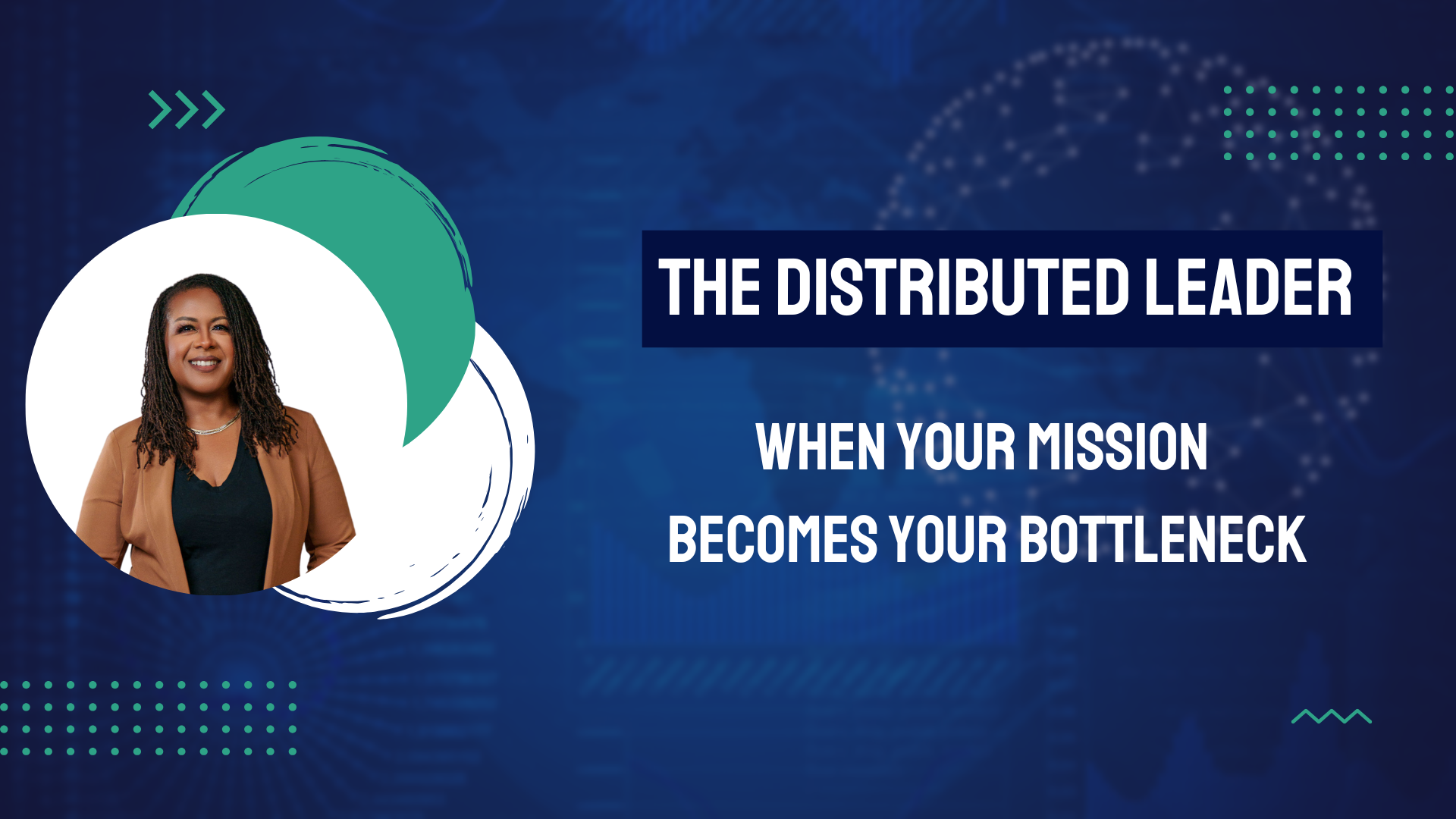
Shanté Smith-Daniels is a Fractional COO and Strategic Operations Advisor at SSD Consulting LLC. She works with founders scaling distributed and global teams across people, profits, and peace of mind.
RELATED POST: